
```
The Future of Digital Payments in Africa
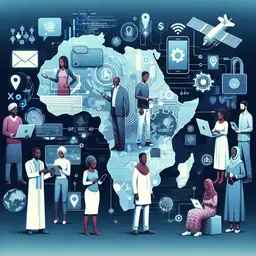
Imagine a cashless Africa where **digital payments** flow seamlessly from Nairobi to Cape Town, empowering millions with instant access to financial services. **The future of digital payments in Africa** is bright, fueled by mobile money explosions, instant payment systems, and fintech innovations tailored for the continent's unique needs—especially resonant for South Africans eyeing regional opportunities.[1][2]
Current Trends Driving the Future of Digital Payments in Africa
Africa's payment landscape is undergoing a profound shift from cash to digital, with electronic payments boosting financial inclusion. Digital payment volumes surged 16% in 2024 alone, driven by rising mobile penetration and fintech growth.[1] In South Africa, contactless payments now make up 53% of transactions, up from 42% two years ago, thanks to solutions like SnapScan for QR-based card payments.[1]
One high-searched keyword this month, "**mobile money Africa**", dominates as smartphone adoption propels wallets like M-Pesa in Kenya and MTN MoMo across borders into daily use for e-commerce and utilities.[1][2] Nigeria saw electronic transactions hit N600 trillion in 2023, a 55% jump.[1]
Key Growth Drivers
- Instant Payment Systems (IPS): 31 systems across 26 countries enable real-time bank-fintech-mobile interoperability, processing over $500 billion.[1][7]
- Digital Wallets Evolution: Beyond transfers, they now offer biometrics, Buy Now Pay Later (BNPL), and low-cost cross-border options.[1]
- QR Payments: Bridging cash and digital, popular in Rwanda, Nigeria, and South Africa for inclusivity.[1]
McKinsey projects strong growth in account-based, card, and e-wallet transactions, with South Africa leading at $5 billion in e-payments revenue by 2025.[3]
Emerging Technologies Shaping the Future of Digital Payments in Africa
The second fintech wave moves beyond peer-to-peer (P2P) to B2B and public-sector flows, with revenues expected to grow 13x by 2030.[4] Real-time switches like Nigeria's NIP and Kenya's PESALink, plus dense agent networks, lay the groundwork.[4]
Cross-border innovations stand out: The Pan-African Payment and Settlement System (PAPSS) and BRICS Pay settle in local currencies, dodging USD/EUR routes for faster, cheaper remittances—vital for South African traders.[5] IMF notes fast payments, CBDCs, and mobile money as policy priorities in Sub-Saharan Africa.[6]
South Africa-Specific Insights
For South Africans, **the future of digital payments in Africa** means leveraging local strengths. Explore Mahala CRM's payment processing solutions for seamless integration, and check their digital transformation guide for business tips.[internal]
Challenges and Opportunities in the Future of Digital Payments in Africa
Cybersecurity threats, infrastructure gaps, and regulatory silos persist, but opportunities abound for payment service providers (PSPs).[1] Interoperability is key, with half of IPS now linking banks and mobile operators.[7]
| Challenge | Opportunity |
|---|---|
| Cyber threats & infrastructure limits[1] | Innovate with biometrics & IPS[1][7] |
| Regulatory fragmentation[5] | PAPSS for local-currency settlements[5] |
| Low account penetration[3] | Mobile wallets for unbanked[2][4] |
Fintechs like GoPremium are pioneering with consumer-focused strategies.[2] For deeper reading, see Akurateco's report: Shaping the Future of Payments in Africa.[1]
Conclusion: Seizing the Future of Digital Payments in Africa
**The future of digital payments in Africa** promises a $2 trillion instant payments ecosystem by 2025, driving inclusion and growth.[7] South Africans, with advanced infrastructure, are poised to lead—adopt mobile money, embrace IPS, and innovate cross-border. The shift is here; businesses integrating now, via tools like Mahala CRM, will thrive in this digital boom.[1][2][3]
// Sample: Integrate mobile money API for South African merchants
function processMobilePayment(amount, walletId) {
  return fetch('/api/mobile-money', {
    method: 'POST',
    body: JSON.stringify({amount, walletId})
  }).then(res => res.json());
}