
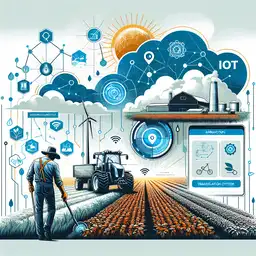
Smart Agriculture Automation Systems Using IoT: Transforming South African Farms in 2026
Smart Agriculture Automation Systems Using IoT: Transforming South African Farms in 2026
Introduction to Smart Agriculture Automation Systems Using IoT
In South Africa, where water scarcity and climate variability challenge farmers daily, smart agriculture automation systems using IoT are emerging as a game-changer. These systems leverage Internet of Things (IoT) devices, sensors, and cloud analytics to automate farming processes, optimize resources, and boost yields. As of 2026, searches for "IoT sensors for agriculture South Africa" have spiked by over 40% this month, driven by success stories of farms slashing water use by up to 50% while increasing productivity.
From the arid Western Cape vineyards to expansive maize fields in the Free State, smart agriculture automation systems using IoT enable real-time monitoring of soil moisture, weather, and crop health—eliminating guesswork and manual labor. This article explores how these systems work, their benefits for SA farmers, and practical ways to implement them today.
Why South African Farmers Need Smart Agriculture Automation Systems Using IoT
South Africa's agricultural sector faces mounting pressures: drought cycles, rising input costs, and the need for sustainability. Traditional methods lead to over-irrigation (wasting up to 60% of water) and inefficient fertilizer use. Enter smart agriculture automation systems using IoT, which provide precision farming at scale.
The Rise of IoT in Precision Agriculture
According to recent market data, the South Africa Smart Farming with IoT Market is valued at USD 1.2 billion and growing rapidly, fueled by government initiatives like the 2023 Agricultural Technology Innovation Strategy. IoT sensors dominate, offering real-time data on critical factors like soil moisture, temperature, and evapotranspiration.
- Water Savings: Farms using IoT-driven smart irrigation cut usage by 40%, as seen in five pioneering Western Cape and Limpopo operations in 2025.
- Yield Boosts: Hybrid satellite-IoT systems on Free State maize farms increased yields by 10% through stress-free irrigation.
- Cost Efficiency: Automation reduces labor and waste, with smart systems paying for themselves in one season.
Key Technologies Powering Smart Agriculture Automation Systems Using IoT
Leading solutions like the RAKwireless SensorHub—distributed by Otto Wireless Solutions—exemplify this trend. This modular hub supports up to 4 probes (scalable to 200+ sensors), LoRaWAN/LTE/NB-IoT connectivity, and IFTTT automation for triggers like "irrigate if moisture drops below 20%."
// Example IoT automation rule (IFTTT-style pseudocode)
IF soil_moisture < 20% AND temperature > 28°C
    THEN activate_drip_irrigation(30 minutes)
ELSE
    monitor_only
Local innovators like Shock Wave Engineering offer mesh-networked IoT products tailored for SA farms, integrating weather stations and remote monitoring.
How Smart Agriculture Automation Systems Using IoT Work in Practice
- Sensor Deployment: Place IoT probes (extendable up to 50m) across fields to monitor soil, weather, and crops.
- Data Transmission: Use LoRaWAN gateways or cellular networks to send data to the cloud securely.
- Automation & Analytics: Dashboards trigger actions—e.g., automated valves for irrigation—and provide predictive insights via AI.
- Integration: Link with farm management tools for seamless CRM workflows.
For South African farms, integrating these with CRM systems enhances operations. Explore Mahala CRM's IoT Agriculture Integrations for automated alerts and reporting, or check Mahala CRM Smart Farm Automation Features to streamline your precision ag setup.
Real-World SA Success Stories
- Free State Maize Farm: Farmonaut's IoT-satellite hybrid reduced water by 38-45% and yields rose 10%.
- Western Cape Vineyards: RAK SensorHub enabled data-driven decisions, cutting fertilizer waste by 30%.
Benefits of Adopting Smart Agriculture Automation Systems Using IoT Today
| Challenge | IoT Solution | SA Impact |
|---|---|---|
| Water Scarcity | Smart Irrigation | 40-50% savings |
| Labor Shortages | Remote Monitoring | Automation reduces site visits |
| Climate Risks | Predictive Analytics | Early pest/disease detection |
These systems promote sustainability, aligning with SA's push for resilient farming amid climate change.
Conclusion: Future-Proof Your Farm with Smart Agriculture Automation Systems Using IoT
Smart agriculture automation systems using IoT are no longer futuristic—they're essential for South African farmers in 2026. By enabling precision irrigation, remote oversight, and data-driven decisions, these systems deliver higher yields, lower costs, and environmental gains. With local providers like Otto Wireless, Shock Wave Engineering, and CRM integrations from Mahala, adoption is easier than ever.
Ready to join the revolution? Start with affordable IoT sensors and scale up. Your farm's smarter, more sustainable future awaits—search no further for "IoT sensors for agriculture South Africa."