
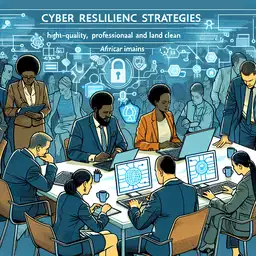
Cyber Resilience Strategies for African Companies
In today's rapidly digitizing African landscape, cyber resilience strategies for African companies are essential to safeguard businesses against surging threats like ransomware, data breaches, and business email compromise. As Africa's GDP is projected to expand by 4.1% in 2025 amid rising cyber risks that already siphon off about a tenth of the continent's output, companies must prioritize preparedness to ensure sustainable growth[1][5].
Why Cyber Resilience Matters for African Businesses
Africa's digital boom—driven by mobile money, e-commerce, and over 500 million internet users—has outpaced cybersecurity maturity, leading to over $3 billion in cyber incident losses between 2019 and 2025[1][5]. South African firms, alongside those in Kenya, Ghana, and Nigeria, face frequent malware and ransomware attacks, making cyber resilience strategies for African companies a trending imperative in 2026, especially with high-search terms like "AI-driven cyber defense" gaining traction this month amid skills shortages[4].
Without resilience, supply chains cascade failures across borders, threatening SMEs that dominate the economy. Board-level commitment is key: integrate cyber protections into long-term strategies, from executive buy-in to employee training[2].
Key Cyber Resilience Strategies for African Companies
Effective cyber resilience strategies for African companies shift focus from prevention alone to recovery, emphasizing six core pillars while addressing local challenges like infrastructure gaps and talent deficits[3][4].
1. Embed Security in Design and Prioritize Basic Controls
Start with fundamentals: enforce strong, unique passwords, multi-factor authentication (MFA), and regular software updates to block most attacks[5]. Embed security-by-design in infrastructure, using cloud computing for scalable threat detection and disaster recovery—ideal for Africa's resource constraints[4].
- Conduct regular security audits and penetration testing.
- Secure configurations and update systems proactively[2].
2. Strengthen the Human Firewall and Build Skills
Africa's cyber skills gap demands urgent action. Train employees on threat recognition via national campaigns like Rwanda’s “Tekana Online”[5]. Outsource to vendors for SMEs, and pursue certifications like ISO/IEC 27001 for management baselines[2].
Explore our CRM training programs at Mahala CRM to upskill teams in secure data handling, linking cyber hygiene to customer resilience.
3. Focus on Incident Response and Supply Chain Security
Develop crisis management processes and readiness drills. Assess exposures in supply chains, including third-party vendors, and extend resilience measures continent-wide[1][3][6]. Public-private partnerships, like Operation Serengeti, prove cross-border collaboration dismantles threats[5].
- Implement proactive detection and rapid response.
- Share threat intelligence regionally[6].
- Leverage cyber insurance to transfer risks[1].
4. Protect Data Integrity with Innovative Tech
Use backups, restoration testing, and emerging tools like AI for real-time threats— a top-searched "AI-driven cyber defense" trend[4]. Blockchain offers potential for North African firms, but mitigate its immaturity[2]. Integrate cyber risks into all decisions.
Discover Mahala CRM's secure CRM solutions tailored for African businesses, ensuring data integrity amid digital transformation.
5. Policy, Partnerships, and Incentives
Governments should enforce data protection laws, offer investment incentives, and foster alliances. For deeper insights, read the Cybcube report on Africa's rising cyber risk[1].
// Sample incident response playbook snippet
if (threat_detected) {
  trigger_alert();
  isolate_affected_systems();
  notify_stakeholders();
  restore_from_backup();
}
Overcoming Challenges: A Tailored African Approach
South African companies can lead by adopting layered defenses: risk-centric assessments, vendor ecosystems, and economic incentives for security[6]. While North Africa invests in tech (e.g., $1.8B in 2017 spending), sub-Saharan SMEs need affordable outsourcing and insurance[1][2].
Conclusion
Implementing robust cyber resilience strategies for African companies isn't optional—it's a growth enabler. By prioritizing board-level strategies, skills development, supply chain vigilance, and partnerships, African businesses can recover swiftly, attract investments, and thrive in a threat-laden digital era[3][4]. Act now: assess your exposures and build resilience today.