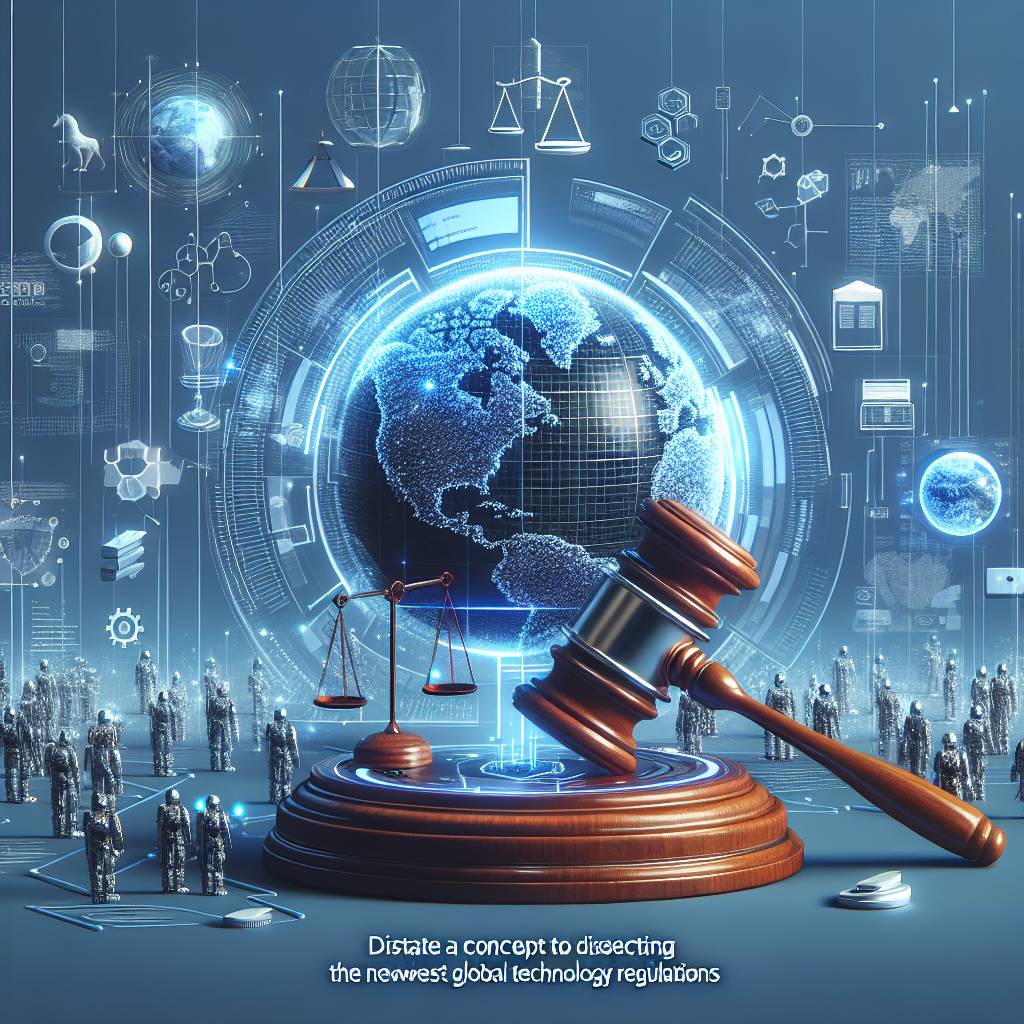
Breaking down the latest global tech regulations
As South African businesses increasingly integrate AI, cloud services, and digital platforms into their operations, understanding the latest global tech regulations is crucial for compliance and growth. This article breaks down key 2026 regulations like the EU AI Act, DORA, and NIST updates, tailored for SA companies navigating international trade and data flows.[1][2][3]
Why South African Businesses Need to Care About Breaking Down the Latest Global Tech Regulations
South Africa's tech sector is booming, with fintech, e-commerce, and AI startups leading the charge. However, global regulations directly impact local firms exporting services or handling international data. For instance, SA companies serving EU clients must comply with DORA (Digital Operational Resilience Act), effective January 2026, which mandates real-time risk monitoring and third-party oversight for financial IT providers.[1] Non-compliance risks fines up to 7% of global turnover under the EU AI Act.[3]
High-searched terms like AI governance reflect this urgency, as businesses search for ways to align with evolving rules on AI risk classification and cybersecurity.[1][2] Locally, link to our Mahala CRM compliance solutions for automated tracking tools designed for SA enterprises.
Key Global Regulations Shaping 2026: A Breakdown
Here's a focused breakdown of the latest global tech regulations dominating 2026, with implications for South African firms:
EU AI Act: Tiered Risk and High-Stakes Compliance
The EU AI Act enforces high-risk obligations from August 2026, requiring impact assessments, registration, and monitoring for AI in finance and employment. Legacy general-purpose AI models comply by August 2027, with fines up to €35 million.[3] SA developers using AI must adopt watermarking and detection for synthetic content, mirroring China's standards effective November 2025.[3]
- Risk tiers: Prohibited (unacceptable risk), high-risk (assessments needed), limited/minimal risk.
- SA impact: Exporting AI tools? Prepare for third-party conformity by mid-2027.[3]
DORA and Cyber Resilience Act (CRA)
DORA demands incident reporting, resilience testing, and third-party contracts for EU financial entities—extending to non-EU providers like SA MSPs.[1] The CRA, ramping up in late 2026, requires Software Bill of Materials (SBOM) for products, vulnerability reporting, and updates—delaying full reporting to 2027.[2]
// Example SBOM snippet for compliance
{
  "components": [
    {
      "name": "library XYZ",
      "version": "1.2.3",
      "dependencies": ["vuln-free"]
    }
  ]
}
Explore SA-specific cybersecurity training via our Mahala CRM tech training resources.
NIST CSF 2.0 and US State Laws
Updated NIST Cybersecurity Framework emphasizes governance, supply chain risks, and AI/OT controls, mapping to SOC 2 and CMMC.[1] In the US, Colorado’s AI Act hits June 30, 2026, mandating governance for high-risk systems, with state-by-state laws creating a compliance patchwork.[4][5]
- Inventory AI systems by use case.
- Document testing and risk disclosure.
- Align procurement with vendor safety docs.[4]
Global Privacy and Emerging Tech Rules
GDPR evolves with automated processing and data transfer rules, while China's AI Safety Framework and watermarking combat misinformation.[1][3] Cross-border laws demand data localization in Brazil, India, and the EU.[1] For crypto and ESG, expect heightened accountability in 2026.[2]
How SA Companies Can Turn Compliance into a Competitive Edge
Adopt RegTech for automation, AI-powered monitoring, and training. South African firms can leverage tools like ISO 27001 updates for cloud-native security.[1] For deeper insights, check this external resource: Prime Secured's 2026 IT Compliance Guide.
Proactive steps include:
- Audit third-party risks quarterly.
- Implement AI audit trails.
- Train teams on AI governance frameworks.
Final Thoughts on Breaking Down the Latest Global Tech Regulations
Staying ahead of these latest global tech regulations protects SA businesses from penalties and builds trust. With AI governance and cybersecurity at the forefront, now's the time to integrate compliance into your strategy—ensuring resilience in a connected world.[1][2][3]